
Arthroscopic ACL Surgery
The comprehensive 2026 guide: From Acute Pain to Return-to-Play Success using US clinical pathways.
1. What is Arthroscopic ACL Surgery, How Long Does it Take, and Is it Dangerous?
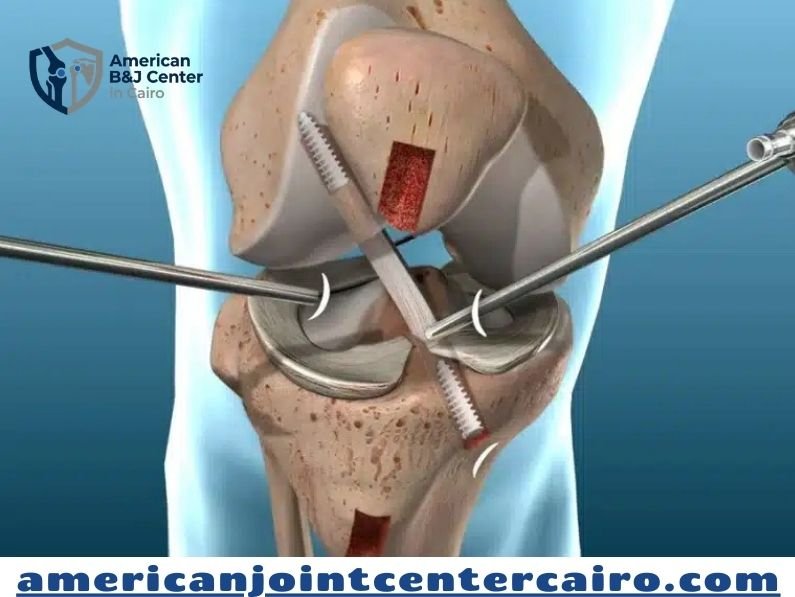
Arthroscopic Anterior Cruciate Ligament (ACL) surgery is a minimally invasive procedure designed to replace a torn ligament with a robust tendon graft. Utilizing Quantum-HD Visualization and incisions no larger than 0.5 cm, surgeons can completely restore the knee’s mechanical stability. The procedure typically takes 45 to 90 minutes to complete, depending on associated meniscus repairs.
To answer the common concern: No, the surgery is not dangerous. As established in the paper published in 2026 titled “Comparative assessment of graft maturity after anterior cruciate ligament reconstruction,” it is one of the most standardized and safe orthopedic interventions worldwide, boasting a clinical success rate of over 96% in active individuals.
2. When to See a Surgeon? (Preoperative Checklist)
Immediate action dictates the long-term health of your cartilage. Seek an orthopedic evaluation from a specialized sports medicine surgeon if you experience:
- You heard or felt a distinct “pop” followed by sharp pain.
- The joint swelled massively within 1 to 2 hours of the injury (hemarthrosis).
- Inability to bear weight or a distinct feeling of the knee “giving way.”
- A mechanical block preventing you from fully extending (straightening) the leg.
3. The Surgical Procedure Breakdown (The “How”)
At the American Center for Knee and Shoulder Surgeries, we rely on the “Integrated Biological Fixation” pathway to recreate the exact anatomy of the joint.
Kinematic Joint Registration
The surgery begins with an arthroscopic sweep. Using a 4K camera, the surgeon identifies the exact native footprint of your torn ACL. This sub-millimeter anatomic mapping prevents future impingement and guarantees normal knee kinematics.
Graft Harvesting & Preparation
A graft (such as the Quadriceps Tendon, capable of 2400N of tensile strength) is carefully extracted. We often combine this with Internal Bracing—a high-strength suture tape that acts as a mechanical “seatbelt” for the new tissue during early healing.
Biocomposite Biological Fixation
Bone tunnels are drilled into the tibia and femur. The graft is pulled through and secured under physiological tension using FDA-approved biocomposite screws. These modern anchors actually stimulate surrounding bone growth, integrating fully over 12-24 months.
4. Cost, Quality, and Clinical Excellence (EEAT)
The cost of ACL reconstruction varies widely, primarily driven by the quality of materials and the clinical environment.
Leadership of Prof. Dr. Ibrahim Abdelmonem
Your surgical outcome is dictated by the surgeon’s expertise. Prof. Dr. Ibrahim Abdelmonem, Professor of Orthopaedic Surgery at Ain Shams University, personally ensures that every reconstruction adheres to rigorous Evidence-Based Medicine (EBM) protocols.
FDA-Approved Implants
A significant portion of the surgery’s cost involves the hardware. We exclusively utilize US-imported, FDA-approved fixation devices. Cutting costs on anchors can lead to catastrophic graft loosening; high-quality materials guarantee secure biological integration.
Surgical Setting & Technology
The total investment also reflects the use of state-of-the-art 4K arthroscopic towers, sterile airflow operating theaters, and orthobiologics (such as PRP) that we deploy to accelerate tissue healing.
5. Post-Operative Recovery to Success
The timeline from acute pain to final success is a criteria-based journey, detailed below:
| Phase | Timeline | Clinical Milestones |
|---|---|---|
| Phase 1: Protection | 0 – 2 Weeks | Pain control, walking with crutches, achieving full extension. |
| Phase 2: Activation | 2 – 12 Weeks | Eliminating crutches, regaining 120° flexion, restoring gait. |
| Phase 3: Strengthening | 3 – 6 Months | Introduction of jogging, plyometrics, and building muscle symmetry. |
| Phase 4: Success / RTS | 9 – 12 Months | Return to Sport clearance (Requires >95% Limb Symmetry Index). |
Frequently Asked Questions
Medical References:
- American Academy of Orthopaedic Surgeons (AAOS), OrthoInfo: Anterior Cruciate Ligament (ACL) Injuries
- American Academy of Orthopaedic Surgeons (AAOS), OrthoInfo: ACL Injury: Does It Require Surgery?
- Frobell RB, et al. A Randomized Trial of Treatment for Acute Anterior Cruciate Ligament Tears. N Engl J Med. 2010;363:331-342. doi:10.1056/NEJMoa0907797
- Ardern CL, et al. Fifty-five per cent return to competitive sport following anterior cruciate ligament reconstruction surgery: an updated systematic review and meta-analysis including aspects of physical functioning and contextual factors. Br J Sports Med. 2014;48:1543-1552. doi:10.1136/bjsports-2013-093398
- Ardern CL, et al. Return to sport following anterior cruciate ligament reconstruction surgery: a systematic review and meta-analysis of the state of play. Br J Sports Med. 2011;45(7):596-606. doi:10.1136/bjsm.2010.076364
- Grindem H, et al. Simple decision rules can reduce reinjury risk by 84% after ACL reconstruction: the Delaware-Oslo ACL cohort study. Br J Sports Med. 2016;50(13):804-808. doi:10.1136/bjsports-2016-096031
- Webster KE, et al. Meta-analysis of meta-analyses of anterior cruciate ligament injury reduction training programs. J Orthop Res. 2018;36(10):2696-2708. doi:10.1002/jor.24043
- Snaebjörnsson T, et al. Graft diameter as a predictor for revision anterior cruciate ligament reconstruction and KOOS and EQ-5D values: a cohort study from the Swedish National Knee Ligament Register based on 2240 patients. Am J Sports Med. 2017;45(9):2092-2097. doi:10.1177/0363546517704177