Shoulder injection prices in Cairo 2026: cortisone, hyaluronic acid & PRP — price ranges in Egyptian pounds, what drives the difference, and how to choose the right type.
A shoulder injection is a precise interventional medical procedure aimed at relieving chronic pain, suppressing acute inflammation, or improving lubrication within the shoulder joint and surrounding tissues (such as tendons and bursae). Injections are classified into three main types:
Patient’s blood plasma concentrated with growth factors
Stimulate autologous cellular regeneration of tissues and cartilage
6–12 months
Anesthetic injection (diagnostic)
Lidocaine / Bupivacaine
Accurately identify the source of pain before the treatment plan
A few hours (diagnostic only)
Medical Note: Cortisone injections are usually mixed with a local anesthetic (such as Lidocaine) to provide immediate pain relief while the anti-inflammatory substance begins working within days. Hyaluronic acid and plasma are injected alone for their structural regenerative properties.
Shoulder Injection Prices in Egypt 2026
Prices in Cairo and other governorates vary based on the type of injected substance, the medical center’s equipment, and whether the procedure relies on Ultrasound-Guided Injection to ensure absolute accuracy.
* تنويه طبي هام: التقديرات إرشادية وتخضع لأسعار استيراد المستلزمات الطبية المعتمدة في السوق المصري لعام 2026. تختلف استجابة مفصل الكتف بحسب دقة موضع الحقن، وحالة أوتار الكفة المدورة (Rotator Cuff)، ووجود قطع كامل من عدمه؛ حيث يُوصى بالحقن الموجه بالموجات فوق الصوتية (Ultrasound-Guided) لضمان وصول المادة العلاجية إلى التجويف المستهدف بدقة متناهية.
Factors Affecting the Price of Shoulder Injections
Type of Substance Used: Biological materials (PRP and high-quality sterile separation tubes) and high molecular weight hyaluronic acid are more costly than traditional cortisone.
Ultrasound Guidance Technique: Using ultrasound adds fees ranging between 500 to 1,500 EGP, but it raises accuracy and safety from 70% to over 95%.
Doctor’s Academic and Professional Experience: The fees of a consultant or university professor differ from general practitioners.
Location and Level of Medical Facility: Prices vary by 20% to 40% between major investment hospitals and specialized clinics in areas like New Cairo (Fifth Settlement) and Mohandessin compared to other regions.
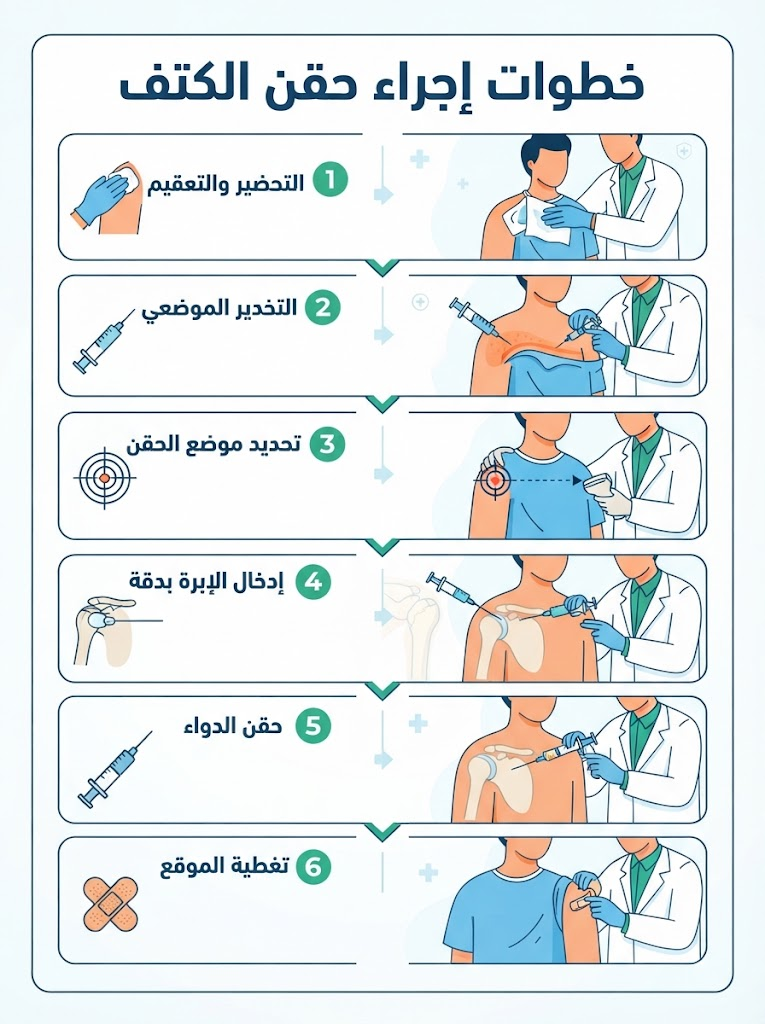
How is a Shoulder Injection Performed? Procedure Steps
Injection is a quick outpatient procedure taking no more than 10 to 20 minutes without general anesthesia:
Evaluation and Diagnosis: Reviewing imaging (MRI and X-ray) and examining the shoulder clinically.
Determining Injection Site: (Glenohumeral joint, subacromial bursa, AC joint, or biceps tendon sheath).
Sterilization and Preparation: Sterilizing the skin with an antimicrobial solution (Betadine or Chlorhexidine).
Ultrasound Guidance (Optional and Precise): Tracking the needle path in real-time on screen to ensure reaching the proper tissue target.
Injection and Monitoring: Slowly injecting the substance, withdrawing the needle, placing a sterile dressing, and monitoring the patient for a few minutes before leaving the clinic.
Side Effects and Contraindications of Shoulder Injections
Thoughtful and expertly administered injections are considered very safe (with a safety rate exceeding 99%). Rare complications are usually limited to the excessive use of cortisone:
Transient post-injection flare (pain): Occurs in 10-15% of patients during the first 48 hours and resolves with ice and simple painkillers.
Temporary rise in blood sugar: Lasts 24–72 hours after cortisone (requires monitoring for diabetic patients).
Fat atrophy or skin whitening: Rare and happens with incorrect superficial injection.
Joint infection (Septic Arthritis): Extremely rare (less than one case per 10,000 injections) with strict adherence to surgical antiseptics.
Contraindications:
Absolute Contraindications: Active infection in or around the joint, documented allergy to the injection substance.
Relative Contraindications: Uncontrolled diabetes, taking strong anticoagulants (requires medical coordination to stop them temporarily), and failure of more than 3 previous cortisone injections (which necessitates surgical evaluation).
Prof. Dr. Ibrahim Abdelmonem (Professor of Orthopedic and Joint Surgery at Ain Shams University and Visiting Professor at Ohio State University) is one of the prominent shoulder consultants in Egypt with decades of experience in arthroscopic shoulder surgery, joint replacement, and bone tumor treatment.
Dr. Abdelmonem performs shoulder injections under ultrasound guidance to ensure complete accuracy in reaching the target site, and provides a comprehensive diagnosis before any treatment decision. Clinics are located in four locations in Cairo:
Nasr City Branch
Fifth Settlement Branch
Mohandessin Branch
Batal Ahmed Abdel Aziz Branch (Mohandessin)
Frequently Asked Questions: Shoulder Injection Prices and Costs
What is the approximate cost of shoulder injections?
Shoulder injection pricing varies significantly depending on the type of medication and medical technology used. Local corticosteroid injections generally range from affordable outpatient fees, whereas biologic treatments like platelet-rich plasma (PRP) or viscosupplementation carry higher per-session costs due to advanced preparation kits and specialized equipment.
Why do shoulder injection prices vary between different medical centers?
Price variations are driven by several key factors: the academic and clinical expertise of the treating orthopedic or sports medicine specialist, the facility’s tier and accreditation, the brand and source of the injectable compounds or PRP kits, and whether the procedure utilizes real-time ultrasound guidance.
Does the quoted injection price include the physician’s fee and medical supplies?
Pricing structures depend on clinic policy. Often, facilities quote an all-inclusive fee covering the specialist’s consultation, the medication or sterile separation kit, and procedure room fees. However, it is always recommended to verify in advance whether follow-up evaluations or preliminary imaging are billed separately.
What is the cost difference between corticosteroid and PRP (Platelet-Rich Plasma) injections?
Corticosteroid injections are generally lower in cost due to the inexpensive nature of the pharmaceutical agent. In contrast, PRP therapy involves higher expenses due to the cost of specialized sterile centrifuge kits, automated processing equipment, and meticulous cell-harvesting protocols required to achieve an optimal growth factor concentration.
Are shoulder injections covered by private health insurance policies?
Coverage depends heavily on your specific insurance provider and policy tier. Standard health insurance plans frequently cover medically necessary corticosteroid or therapeutic joint injections when properly diagnosed, whereas regenerative biologic treatments like PRP may require formal pre-approval or carry partial out-of-pocket expenses.
Will multiple injection sessions affect the overall financial investment?
Treatment plans dictate overall costs. While a corticosteroid protocol may only require one or two injections spaced months apart, biologic therapies such as PRP often necessitate a series of 2 to 3 consecutive sessions to achieve maximum tissue regeneration, which impacts the cumulative cost of the therapeutic program.
Why is ultrasound guidance a worthwhile investment despite adding to procedure fees?
Although ultrasound guidance may add a minor technology fee to the procedure, it ensures pinpoint anatomical accuracy—delivering the medication directly into the target bursa or tendon sheath with over 95% precision. This prevents financial waste from misdirected injections and protects healthy tendon fibers from accidental damage.
Are there any hidden costs associated with shoulder injection procedures?
There are typically no hidden fees, but patients should budget for preliminary diagnostic imaging (such as an MRI or diagnostic ultrasound) if not already completed, as well as any supportive post-procedure medications or prescribed physical therapy sessions recommended to maximize rehabilitation outcomes.
How do imported versus local injectable products affect the overall price?
Brand origin and manufacturing standards play a major role in pricing. Imported biologic kits, high-purity hyaluronic acid viscosupplements, and internationally certified PRP systems usually carry a higher price tag than local alternatives to guarantee strict sterility, safety, and consistent biological potency.
When does surgery become a more cost-effective option than repeated expensive injections?
If repeated injections provide only short-term pain relief without structural healing—such as in full-thickness rotator cuff tears or advanced mechanical impingement—continuing to pay for recurring temporary injections becomes economically inefficient. In such cases, arthroscopic surgery offers a definitive, long-term solution.