
Did you know that patients with diabetes are 3.69 times more likely to develop frozen shoulder compared to individuals without diabetes? The relationship between diabetes and shoulder pain is a scientifically established link that spans multiple musculoskeletal conditions. In this comprehensive medical guide, you will learn about all bone and joint disorders linked to diabetes, how chronic hyperglycemia triggers capsular contracture and tendon damage via Advanced Glycation End Products (AGEs) and chronic low-grade inflammation, the difference between frozen shoulder and rotator cuff tears in patients with diabetes, key therapeutic distinctions, and practical preventive strategies to reduce the risk of shoulder pathology for diabetic patients in Egypt.
Musculoskeletal and Joint Disorders Associated with Diabetes
Diabetes mellitus is not merely an endocrine or metabolic condition affecting blood glucose levels—it is a systemic disorder that exerts profound pathological effects across the entire musculoskeletal system. Recent systematic medical reviews indicate that between 34% and 83% of individuals with type 2 diabetes develop bone, joint, or periarticular soft-tissue complications over the course of their disease.
The underlying pathophysiological mechanism common to these manifestations is shared: chronic sustained hyperglycemia promotes the excessive generation and accumulation of Advanced Glycation End Products (AGEs). These molecular byproducts cross-link structural collagen fibers, stiffening connective tissues, while concurrent low-grade systemic inflammation and microvascular angiopathy impair local tissue perfusion and cellular repair. After the small joints of the hand, the shoulder joint complex is the most frequently affected site.
Common Musculoskeletal Manifestations in Diabetic Patients:
- Adhesive capsulitis (Frozen shoulder)
- Rotator cuff tendinopathy and tears
- Calcific tendinitis of the shoulder
- Diabetic cheiroarthropathy (stiff hand syndrome)
- Dupuytren’s contracture
- Stenosing tenosynovitis (Trigger finger)
- Carpal tunnel syndrome (CTS)

Diabetes and Frozen Shoulder (Adhesive Capsulitis)
Adhesive capsulitis represents the most common shoulder complication in patients with diabetes mellitus. A comprehensive 2026 systematic review and meta-analysis (Int. Orthop.) encompassing 351,486 participants confirmed that diabetic individuals carry a 3.69-fold increased risk of developing frozen shoulder compared to non-diabetic controls.
Frozen shoulder affects roughly 20% to 30% of diabetic patients, compared to a baseline prevalence of only 2% to 5% in the general population. In fact, patients with diabetes account for nearly 30% of all adhesive capsulitis presentations seen clinically, far exceeding their demographic proportion.
Pathophysiological Mechanisms
- Collagen Cross-Linking (AGEs): Sustained hyperglycemic states drive non-enzymatic glycation, depositing AGEs within the type I and type III collagen fibrils of the glenohumeral joint capsule. This leads to marked stiffening, loss of elasticity, and contracture.
- Pro-inflammatory Cascade: Diabetes-associated chronic inflammation—marked by elevated systemic cytokines including TNF-α, IL-6, and vascular endothelial growth factor (VEGF)—accelerates fibroblastic proliferation and active capsular fibrosis.
- Microvascular Insufficiency: Diabetic microangiopathy reduces vascular supply to the capsular and periarticular tissues, markedly delaying spontaneous recovery.
Clinical Distinctions in Diabetic Frozen Shoulder
Compared to idiopathic adhesive capsulitis in non-diabetic individuals, the diabetic form presents three classic clinical characteristics:
- Greater Pain Intensity: Often more debilitating, with prominent nocturnal symptoms.
- Protracted Duration: Symptoms typically persist for 3 to 5 years if untreated, compared to 1 to 3 years in non-diabetic cohorts.
- Refractory Response: Considerably more resistant to conventional standard conservative management.
The Three Clinical Stages in Diabetic Patients
- Stage 1 (Freezing Phase): Lasts 2–9 months. Characterized by progressive, insidious shoulder pain and early loss of motion. Severe nocturnal pain disrupts sleep patterns.
- Stage 2 (Frozen Phase): Lasts 4–12 months. Resting pain may plateau or diminish slightly, but profound mechanical stiffness dominates, causing severe loss of active and passive range of motion across all planes (especially external rotation and abduction).
- Stage 3 (Thawing Phase): Lasts 6–24 months. Characterized by gradual, spontaneous restoration of mobility. In diabetic patients, full functional recovery is frequently incomplete without targeted medical or surgical intervention.

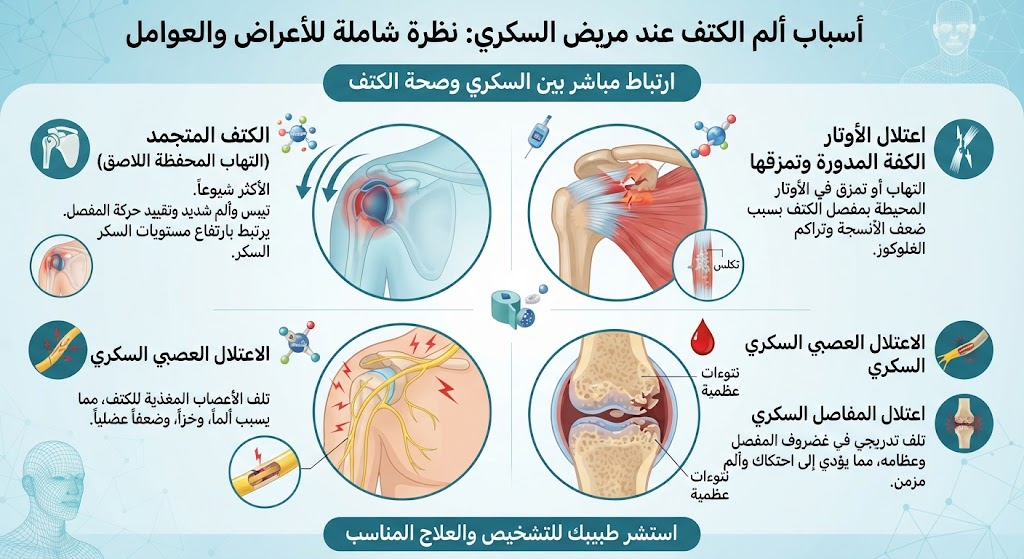
Causes of Shoulder Pain in Diabetic Patients
While adhesive capsulitis is prevalent, diabetes predisposes individuals to a broad spectrum of distinct shoulder pathologies, each possessing discrete etiologies and therapeutic pathways.
- Rotator Cuff Tendinopathy and Tears: Glycation products compromise the structural integrity of tendon collagen bundles, rendering them brittle, hypocellular, and prone to micro-tears under routine physiological loads. Clinical literature (Ann Rheum Dis) demonstrates that diabetic patients undergo surgical rotator cuff repairs at higher rates, while microvascular compromise impairs tendon-to-bone healing and elevates post-operative re-tear rates.
- Calcific Tendinitis: Diabetic individuals demonstrate a 3-fold higher incidence of calcific tendinitis compared to non-diabetics. Hydroxyapatite crystal deposition within the rotator cuff tendons elicits sudden, excruciating inflammatory flare-ups that often awaken patients from sleep.
- Diabetic Peripheral Neuropathy: Altered peripheral somatosensory processing modulates shoulder pain perception, producing atypical clinical presentations where subjective symptom intensity may either mask severe anatomical structural damage or amplify pain signals.
- Microvascular Perfusion Deficits: Hypoperfusion of periarticular tissues impairs metabolic clearance, amplifies chronic local inflammation, and impedes tissue regeneration after mechanical strain.
Shoulder Pain in Diabetic Patients: Key Therapeutic Distinctions
Treating shoulder disorders in the presence of diabetes demands tailored clinical protocols, as systemic endocrine dysregulation alters tissue healing and therapeutic tolerance.
- Injections: Subacromial or intra-articular corticosteroid injections often cause marked systemic hyperglycemia that can persist for 24 to 72 hours. In patients with poorly controlled diabetes (HbA1c > 9%), intra-articular hyaluronic acid viscosupplementation or platelet-rich plasma (PRP) should be considered as safer non-glycemic alternatives whenever clinically indicated. When corticosteroids are clinically indispensable, intensive blood glucose monitoring for at least 72 hours post-injection is required.
- Physical Therapy: Extended, targeted physical therapy is mandatory. Because the contracted capsule rarely resolves spontaneously in diabetic cohorts, formal protocols typically span 12 to 20 weeks (at 2 to 3 sessions per week), compared to standard 6-to-12-week regimens in non-diabetic individuals.
- Surgical Considerations: When conservative care fails and arthroscopic capsular release or rotator cuff repair is indicated, stringent perioperative metabolic control is essential. An HbA1c target below 8% is recommended prior to elective intervention to mitigate infection risks and support compromised tendon-to-bone biology.
Comparative Prevalence and Risk Profile
| Shoulder / Musculoskeletal Disorder | Prevalence in Diabetic Cohorts | Comparison to Non-Diabetic Population |
| Adhesive Capsulitis (Frozen Shoulder) | 20% – 30% | 2% – 5% (3.69-fold higher relative risk) |
| Rotator Cuff Pathology / Tears | Elevated (variable clinical data) | Significantly higher surgical repair & re-tear rates |
| Calcific Tendinitis | Up to 3-fold higher | Increased volume and density of calcific deposits |
| Cheiroarthropathy (Stiff Hand) | 16% – 42% | Infrequent in non-diabetic controls |
| Carpal Tunnel Syndrome | Markedly elevated | Approximately double the baseline risk |
Prevention: Protecting Your Shoulder Joint When Living with Diabetes
Strict glycemic control serves as the cornerstone of musculoskeletal prevention. Optimizing HbA1c suppresses the systemic accumulation of AGEs, halting structural matrix cross-linking and mitigating chronic periarticular inflammatory changes.
- Target HbA1c Management: Maintain glycemic targets (HbA1c < 7.0–7.5% as individualized by an endocrinologist) to protect connective tissue collagen networks from advanced glycation.
- Daily Range-of-Motion Maintenance: Perform 5 to 10 minutes of gentle, structured shoulder range-of-motion drills daily (e.g., pendulum exercises, passive elevation) to preserve capsular compliance.
- Avoid Prolonged Immobilization: Minimize unnecessary shoulder immobilization following upper-extremity injuries or surgeries, initiating early guided passive motion under clinical supervision to avert rapid capsular contracture.
- Correct Nutritional Deficiencies: Screen for and address hypovitaminosis D and calcium imbalances, as vitamin D deficiency is common in diabetic cohorts and correlates with heightened capsular fibrosis risks.
- Proactive Clinical Surveillance: Obtain baseline musculoskeletal ultrasound imaging for individuals with long-standing diabetes (> 10 years) or chronic elevations in HbA1c. Any shoulder discomfort persisting beyond two weeks warrants prompt specialist evaluation, as early stage intervention prevents long-term capsular restriction.

Summary of Preventive Guidelines
| Preventive Step | Clinical Specifics & Actionable Goals |
| Glycemic Control | Maintain HbA1c < 7.0–7.5% to decrease tissue AGE accumulation |
| Daily Shoulder Exercises | 5–10 minutes of daily range-of-motion drills to preserve joint mobility |
| Monitored Joint Mobilization | Early, protected range-of-motion therapy following injuries to prevent contracture |
| Vitamin D & Mineral Balance | Treat vitamin D deficiency to reduce secondary fibrotic risks |
| Annual Diagnostic Ultrasound | Periodic soft-tissue screening for patients with diabetes duration > 10 years or HbA1c > 8% |
Book an Appointment with Prof. Dr. Ibrahim Abdel Moneim
Prof. Dr. Ibrahim Abdel Moneim, Professor of Orthopedic and Joint Surgery at Ain Shams University and Visiting Professor at Ohio State University, provides specialized evaluations for complex shoulder conditions in patients with diabetes, designing customized clinical protocols tailored to diabetic joint pathology.
Clinics located in:
- Nasr City
- New Cairo (Fifth Settlement)
- Mohandessin
- El-Batal Ahmed Abdel Aziz Street

Frequently Asked Questions: Diabetes and Its Link to Shoulder Pain
What is the medical link between diabetes mellitus and shoulder pain?
Why are individuals with diabetes significantly more prone to developing a frozen shoulder?
How does blood sugar control affect the severity and duration of shoulder pain?
What are the early warning signs of shoulder complications in diabetic patients?
Do local corticosteroid shoulder injections affect blood sugar levels in patients with diabetes?
Why is physical therapy recovery slower for diabetic patients with frozen shoulder?
What is the role of diagnostic imaging like MRI in evaluating a diabetic patient’s shoulder?
Is there a connection between diabetes and an increased rate of rotator cuff tears?
How can diabetic patients prevent chronic shoulder joint complications?
When does arthroscopic surgery become necessary for a diabetic patient with a frozen shoulder?
references
- EMJ Reviews — Near Fourfold Risk of Adhesive Capsulitis in Diabetes (Int. Orthop. 2026)
- MDPI J. Clin. Med. (2024) — Narrative Review: Adhesive Capsulitis with Diabetes
- MDPI Int. J. Environ. Res. Public Health — Causes of Shoulder Dysfunction in Diabetic Patients
- Ubie Health — The Surprising Connection Between High Sugar and Stiff Joints (2026)
- Type2Diabetes.com — Muscle and Joint Complications of Diabetes
- The Diabetic Shoulder: Association Between Diabetes Mellitus and Adhesive Capsulitis — Systematic Review & Meta-Analysis — Int Orthop (2026)
- Diabetes as a Risk Factor for the Onset of Frozen Shoulder: Systematic Review & Meta-Analysis — BMJ Open (2023)
- Association Between Frozen Shoulder and Diabetes Mellitus: A Narrative Review — Deraya University (2025)
- Association Between Diabetes Mellitus and Adhesive Capsulitis: Systematic Review & Meta-Analysis — J Health Sci Inst (2025)
- Near Fourfold Risk of Adhesive Capsulitis in Diabetes — EMJ Review of 2026 Meta-Analysis
- Shoulder Dysfunctions in Patients with Diabetes Mellitus: Systematic Qualitative Review — PMC (2022)
- Diabetes as a Risk Factor for Frozen Shoulder: Full Article — BMJ Open (2023)
- Do Diabetic Patients Have Different Outcomes After Arthroscopic Capsular Release for Frozen Shoulder? — Journal of Orthopaedics / PMC (2019)
- Comparison of Outcomes Following Arthroscopic Capsular Release for Idiopathic, Diabetic and Secondary Adhesive Capsulitis — Orthopaedics & Traumatology (2019)
- Risk Factors for Rotator Cuff Tendinopathy Including Diabetes: Systematic Review & Meta-Analysis — J Rehabil Med (2019)