
Adherence to postoperative instruction of rotator cuff repair constitutes the definitive boundary between a successful clinical outcome and the necessity for revision surgery. Tendon-to-bone healing takes several months. Any mechanical failure or non-compliance during the initial six weeks can compromise construct integrity, precipitating tendon re-tear and necessitating a complete surgical revision.
Immediate Post-Operative Phase (Days 1–3)
- American Academy of Orthopaedic Surgeons (AAOS), OrthoInfo: Rotator Cuff Tears
- American Academy of Orthopaedic Surgeons (AAOS), OrthoInfo: Rotator Cuff Tears: Surgical Treatment Options
- Kukkonen J, et al. Treatment of non-traumatic rotator cuff tears. The Bone & Joint Journal. 2014;96-B:75-81. doi:10.1302/0301-620X.96B1.32168
- American Academy of Orthopaedic Surgeons (AAOS), OrthoInfo: Rotator Cuff and Shoulder Conditioning Program
- Yamamoto A, et al. Prevalence and risk factors of a rotator cuff tear in the general population. J Shoulder Elbow Surg. 2010;19(1):116-120. doi:10.1016/j.jse.2009.04.006
- Kuhn JE, et al. Effectiveness of physical therapy in treating atraumatic full-thickness rotator cuff tears: a multicenter prospective cohort study. J Shoulder Elbow Surg. 2013;22(10):1371-1379. doi:10.1016/j.jse.2013.01.026
- McElvany MD, et al. Rotator cuff repair: published evidence on factors associated with repair integrity and clinical outcome. Am J Sports Med. 2015;43(2):491-500. doi:10.1177/0363546514529644
The First Post-Operative Week
- Consume a high-protein diet to provide the necessary substrates for tendinous tissue healing.
- Refrain from driving and avoid bearing any weight with the affected extremity.
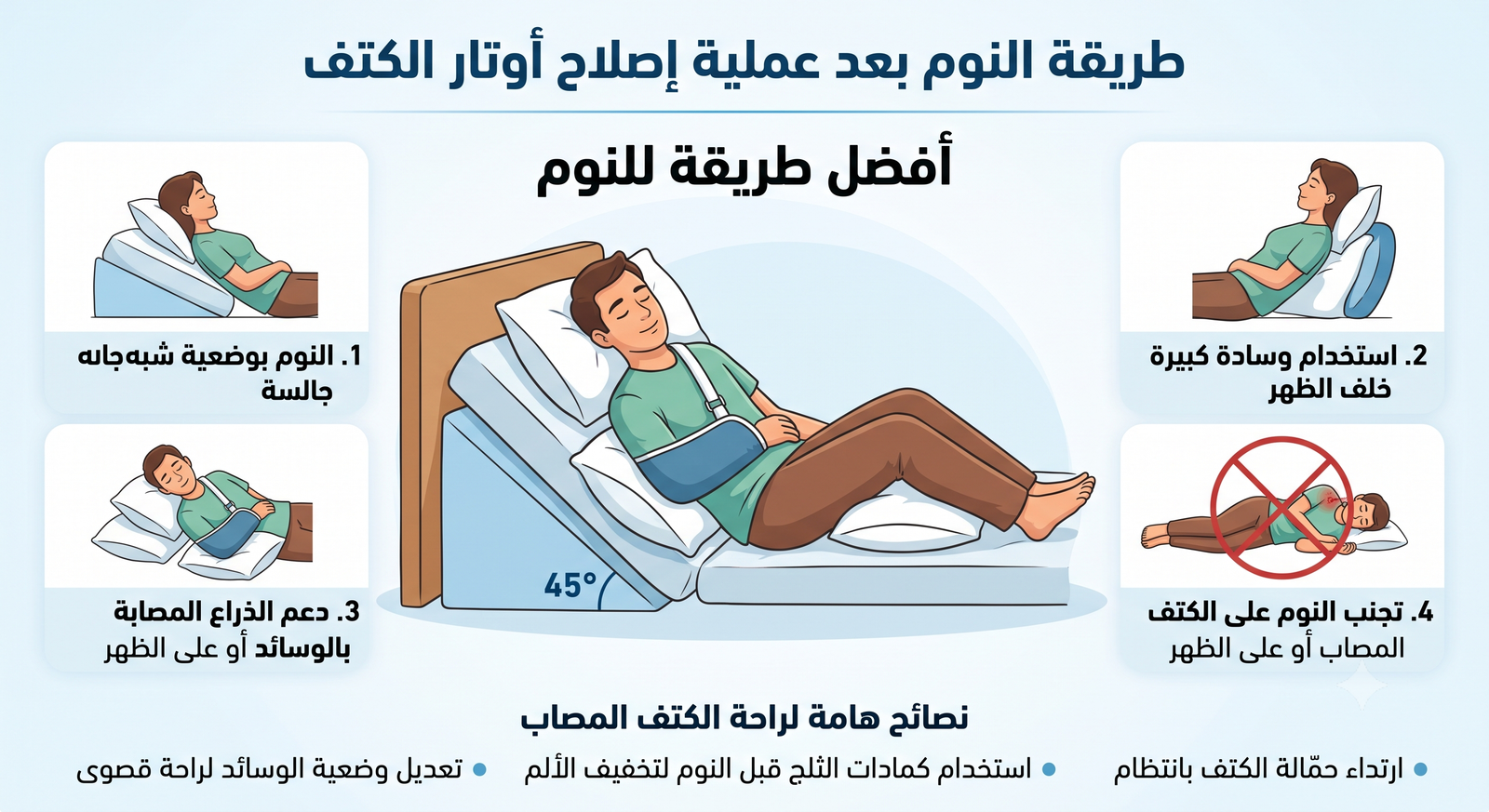
- Sleep in a semi-reclined position and position essential items within reach of the contralateral, healthy hand.
Absolute Contraindications (The First 6 Weeks)
During the initial six weeks, the repaired tendon is fibrovascular and mechanically vulnerable, rendering it incapable of sustaining active loads. Non-compliance significantly elevates the risk of structural failure.
| Contraindicated Activity | Duration | Pathophysiological Rationale |
| Weight-bearing / Lifting | 6 Weeks | Protects structural integrity of the repair |
| Driving | 6–8 Weeks | Requires sufficient neuromuscular control and strength |
| Sleeping on the affected side | 6 Weeks | Prevents mechanical compression and ischemia of the tendon |
| Arm elevation above shoulder level | 6 Weeks | Avoids deleterious shear stresses on the repair |
| Unapproved sling removal | Until cleared | Maintains essential joint immobilization |
| Sports / Athletic training | 6–9 Months | Prevents catastrophic construct failure |
| Nicotine use / Smoking | Total cessation | Impairs microvascular perfusion and tendon healing |
Sleep Positioning and Hygiene
Patients must sleep in a semi-reclined position (approximately 45 degrees) utilizing a recliner or a specialized wedge pillow for 4 to 6 weeks. A flat, supine position exacerbates subacromial pressure and induces nocturnal pain. The immobilization sling must be worn continuously during sleep. For optimal sleep hygiene, administer analgesics 30 minutes prior to bedtime and apply cryotherapy for 20 minutes before sleeping.
Timeline for Comprehensive Recovery
Comprehensive functional recovery typically spans 6 to 9 months for small-to-medium tears, and may extend up to 12 months for massive tears. Discharge generally occurs on the day of surgery or within 24 hours. Sedentary or office work may be resumed within 4 to 6 weeks, while athletic clearance requires 6 to 9 months, subject to orthopedic approval.
| Rehabilitation Phase | Timeline | Primary Clinical Objectives |
| Phase I: Protection | Weeks 1–4 | Strict immobilization, cryotherapy, pain management |
| Phase II: Passive ROM | Weeks 4–8 | Initiating passive physical therapy modalities |
| Phase III: Early Strengthening | Weeks 8–16 | Light, controlled resistive exercises |
| Phase IV: Advanced Strengthening | Months 4–6 | Progressive resistance, return to light manual labor |
| Phase V: Return to Sports | Months 6–9 | High-demand athletic activity (upon surgeon clearance) |
Long-Term Functional Outcomes
The vast majority of patients achieve significant functional restoration. Most patients regain good motion and return to their activities. However, massive structural tears may leave residual deficits in baseline muscular strength.
Activity Resumption Guidelines
- Light Ambulation: Permitted from Post-Op Day 1.
- Showering: Permitted after 48 hours, provided the surgical incision is covered with a waterproof barrier.
- Sedentary Work: Permitted within 4 to 6 weeks.
- Driving: Permitted within 6 to 8 weeks.
- Light Domestic Tasks: Permitted after 3 months.
- Swimming: Permitted after 4 to 6 months.
- Contact or Overhead Throwing Sports: Permitted within 6 to 9 months.
Critical Post-Operative Complications and Pitfalls
- Premature Sling Removal: Resolution of pain does not correlate with histological tendon healing. The construct remains mechanically vulnerable up to the sixth week; premature discontinuation of immobilization can lead to construct failure and costly revision procedures.
- Non-Compliance with Physical Therapy: This represents the primary etiology for glenohumeral stiffness (affecting 2% to 5% of cases) and poor functional outcomes. Delayed rehabilitation significantly prolongs total recovery.
- Premature Return to Strenuous Activity: Recurrence rates range from 3% to 20%, primarily driven by early engagement in athletic or manual labor before official clearance.
- Post-Operative Nicotine Use: Nicotine induces microvascular vasoconstriction, delaying tendinous healing and increasing the risk of infection and construct failure. Cessation is critical for at least two months post-surgery.
- Lateral Decubitus Sleep Position: Sleeping directly on the affected shoulder exerts deleterious compressive forces, causing severe pain and delaying tissue healing.
The Role of Physical Therapy
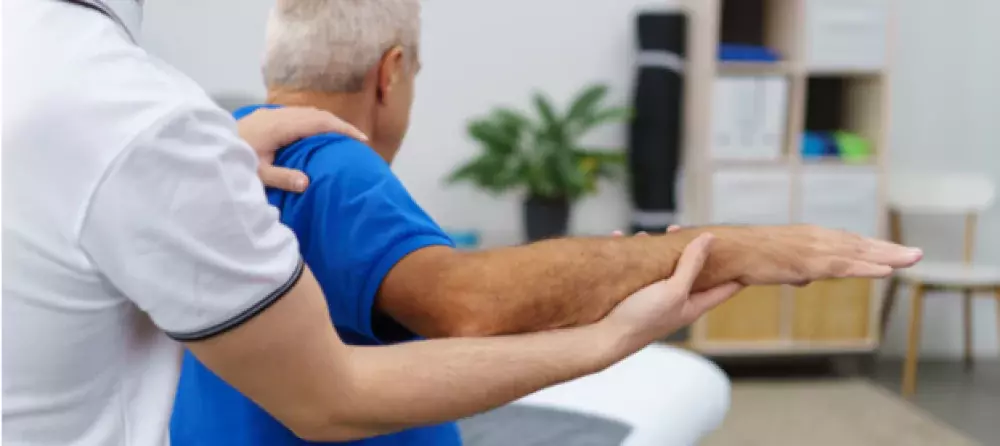
Post-operative physical therapy is a mandatory medical intervention, not an optional modality. It prevents adhesive capsulitis (glenohumeral stiffness), accelerates the restoration of range of motion and strength, and trains the patient in biomechanically safe movement patterns. A structured, progressive rehabilitation protocol is one of the most important factors in the ultimate long-term functional outcome.
Red Flags Demanding Immediate Medical Evaluation
Contact the attending surgeon immediately if any of the following signs present:
- Pyrexia (fever) exceeding 38.5°C (101.3°F) past the third post-operative day.
- Sudden, acute shoulder pain or an audible or felt “popping/tearing” sensation following a period of clinical improvement.
- Exacerbated localized edema, erythema (redness), or purulent drainage from the surgical wounds.
- Persistent paresthesia (numbness or tingling) in the digits or upper extremity lasting beyond 48 hours.
- A sudden loss of active motor function or inability to lift the arm following documented functional progress.
Frequently Asked Questions: Rotator Cuff Repair Post-Op
During the initial 6 weeks, the repaired tendon is in its weakest fibrovascular healing phase and cannot sustain active loads. Any unapproved movement, lifting, or sudden stress can cause a structural failure, leading to a tendon re-tear that requires a second revision surgery.
The repaired rotator cuff tendon needs several months of healing. Full histological maturation and comprehensive recovery can take up to 9 to 12 months.
The sling must be worn continuously day and night during the early recovery phases. It should only be removed for showering or performing clinician-approved distal exercises (moving your wrist, fingers, and elbow). Never discontinue use entirely until cleared by your orthopedic surgeon.
You must sleep in a semi-reclined position at approximately a 45-degree angle for the first 4 to 6 weeks, using a recliner chair or a specialized wedge pillow. Avoid sleeping flat on your back or on the affected side, as flat positioning increases subacromial pressure and nocturnal pain.
Driving is strictly prohibited for the first 6 to 8 weeks following surgery. Operating a vehicle requires sufficient neuromuscular control, rapid reflexes, and symmetric bilateral arm strength to manage sudden steering adjustments safely.
Yes, nicotine induces strong microvascular vasoconstriction, which reduces local blood flow to the healing tendon. This significantly delays tissue repair, increases the statistical risk of infection, and elevates the chance of construct failure. Complete cessation is required for at least 2 months post-op.
Non-compliance or delaying physical therapy is the primary cause of adhesive capsulitis (severe joint stiffness), occurring in 2% to 5% of non-compliant patients. Structured rehabilitation is mandatory to safely restore your range of motion and prevent permanent muscle weakness.
The vast majority of patients achieve excellent functional restoration. Clinical evidence shows significant long-term improvements in active range of motion, and most younger patients return to athletic activities. However, massive structural tears may leave some residual baseline weakness.
Sedentary, light office work can generally be resumed within 4 to 6 weeks. Conversely, returning to contact sports, heavy lifting, or overhead throwing activities requires a minimum of 6 to 9 months and explicit clearance from your surgeon.
You should contact your surgeon immediately if you experience any of the following:
- A fever exceeding 38.5°C (101.3°F) past the third post-op day.
- A sudden, severe pain or an audible “popping” or “tearing” sensation in the shoulder.
- Increased redness, swelling, or foul-smelling drainage from the incisions.
- Persistent numbness or tingling in your hand or fingers lasting over 48 hours.
- A sudden, complete loss of the ability to lift your arm after a period of clear improvement.