
The clinical success rates of rotator cuff repair ranges from 80% to 95%, depending heavily on the initial tear dimensions. Most repairs are performed arthroscopically.
Efficacy and Recurrence Stratification by Tear Size
Initial tear pathology dictates both functional outcomes and tendon durability.
| Tear Size | Clinical Success Rate | Structural Re-tear Rate |
| Small (<1 cm) | 92% – 95% | 3% – 5% |
| Medium (1–3 cm) | 88% – 93% | 5% – 10% |
| Large (3–5 cm) | 80% – 88% | 12% – 18% |
| Massive (>5 cm) | 70% – 80% | 20% – 40% |
Modern Suture Bridge constructs markedly lower structural failures compared to obsolete single-row techniques. Meanwhile, a population study found full-thickness rotator cuff tears in about 21% of people (mean age 58), rising with age—many without symptoms—meaning surgical intervention is reserved for cases causing functional impairment.
Prognostic Variables Affecting Surgical Outcomes
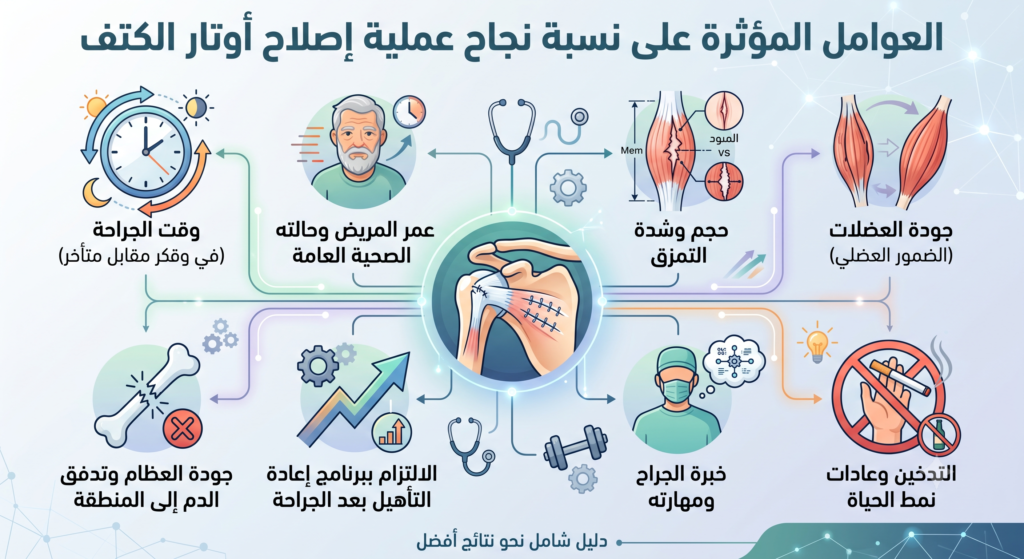
Success Rates of Rotator Cuff Repair relies on a multifactorial clinical profile rather than the operation alone. Surgeon experience in shoulder surgery is an important factor.
- Tear Chronicity & Timing: Intervening early before muscle atrophy yields superior results.
- Modifiable Health Behaviors: Nicotine usage compromises tendinous remodeling. Uncontrolled diabetes mellitus significantly increases surgical site infection risks and delays biological healing.
- Tissue Quality: Traumatic structural tears heal more reliably than chronic, wear-induced degenerative defects.
- Rehabilitation Compliance: Adhering to structured protocols prevents arthrofibrosis and accelerates full functional return.
Functional Recovery and Safety Parameters
While a repaired shoulder rarely mirrors native anatomy 100%, functional recovery is outstanding. Most patients regain good motion and return to their activities, and the repair keeps maturing for many months.
The systemic risks of arthroscopic cuff repairs remain low, with major complications staying below 10%. Serious complications, nerve injury and infection are uncommon. Normal recovery symptoms include temporary pain, edema, and transient nerve-block paresthesia. However, persistent fever (>38.5°C), acute unremitting pain, purulent discharge, or a sudden “tearing” sensation require instant evaluation.
Standard Phased Rehabilitation Index
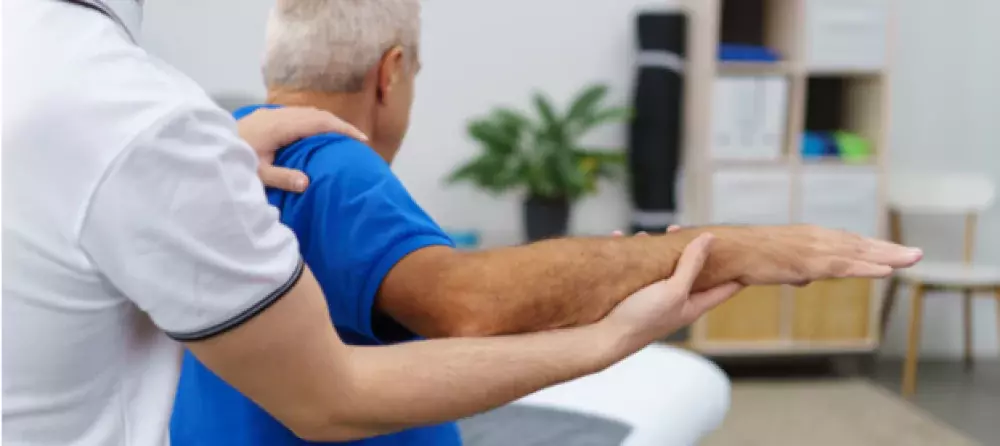
Progressive physical therapy is one of the most important factors for a good functional result; non-compliance yields a 2% to 5% stiffness rate and heightens re-tear risks.
- Weeks 1–4: Continuous sling immobilization; distal joint mobility (hand/elbow) only.
- Weeks 4–8: Therapist-guided passive range of motion; zero active muscle loading.
- Weeks 8–16: Gradual strengthening using progressive elastic resistance.
- Months 4–6: Reintegration of daily living activities and light weight bearing.
- Months 6–9: Return to athletic training, subject to explicit surgeon clearance.
cost of arthroscopic rotator cuff repair in Egypt (2026)
In Egypt, the 2026 cost for arthroscopic rotator cuff repair spans from 35,000 to 95,000 EGP. Definitive pricing is established following clinical examination and MRI diagnostic screening to determine tear volume and the number of suture anchors required. Small tears (1–2 anchors) cost 35,000–55,000 EGP; medium defects (3–4 anchors) average 50,000–75,000 EGP; and large or massive defects range from 65,000 to 95,000 EGP.
Rotator Cuff Repair Success Rates FAQ
1. What is the overall success rate of arthroscopic rotator cuff repair surgery?
The overall clinical success rate—meaning excellent pain alleviation and functional dynamic restoration—spans between 80% and 95%. The primary variable dictating your baseline success metrics is the exact size and pathology of the initial tendon tear at the time of surgery.
2. How do clinical success rates and structural re-tear rates vary by tear size?
Tear size directly affects results: small and medium tears do better, while large and massive tears have lower success and a higher retear rate. Across published studies the average retear rate is about 27%.
3. How does the Suture Bridge jgurgical technique compare to traditional techniques?
Advanced double-row constructs like the Suture Bridge technique markedly optimize footprint stability over traditional single-row approaches. The choice of technique depends on tear size and tissue quality.
4. What is the likelihood of facing serious complications during arthroscopic cuff repair?
Surgical risk indexes remain heavily restricted, with overall major clinical complications holding below 10%. Serious complications, nerve injury and infection are uncommon.
5. Can a patient expect their shoulder to return to 100% normal function?
While repaired tendons rarely match native, pristine anatomy entirely, functional outcomes are exceptional. Most patients regain good range of motion and return to their activities.
6. How long does it take for a repaired rotator cuff tendon to regain its strength?
Biological tendon maturation into the bone is an intensive process. Tendon-to-bone healing and remodeling continue for many months after surgery.
7. Why is structural physical therapy mandatory for achieving a high success rate?
Structured rehabilitation represents the core differentiator governing final joint articulation. Refusing or failing to stay compliant with progressive, criteria-based physical therapy schedules compromises flexibility, triggers a 2% to 5% capsule stiffness rate, and dramatically increases the hazard of structural re-tearing.
8. What steps can I take to maximize the success rate of my cuff repair?
Maximize outcomes by screening for a specialized shoulder specialist with substantial experience. Intervene early before fatty muscular atrophy manifests, stop all smoking for 6 weeks pre-operatively to preserve microvascular flow, tightly govern blood glucose, and systematically advance through your 9-month phased therapy protocols.
References
- American Academy of Orthopaedic Surgeons (AAOS), OrthoInfo: Rotator Cuff Tears
- American Academy of Orthopaedic Surgeons (AAOS), OrthoInfo: Rotator Cuff Tears: Surgical Treatment Options
- Yamamoto A, et al. Prevalence and risk factors of a rotator cuff tear in the general population. J Shoulder Elbow Surg. 2010;19(1):116-120. doi:10.1016/j.jse.2009.04.006
- Kuhn JE, et al. Effectiveness of physical therapy in treating atraumatic full-thickness rotator cuff tears: a multicenter prospective cohort study. J Shoulder Elbow Surg. 2013;22(10):1371-1379. doi:10.1016/j.jse.2013.01.026
- McElvany MD, et al. Rotator cuff repair: published evidence on factors associated with repair integrity and clinical outcome. Am J Sports Med. 2015;43(2):491-500. doi:10.1177/0363546514529644