
Shoulder arthroplasty is a surgical procedure where a damaged joint is replaced with an artificial one made of metal and medical-grade plastic. Patient satisfaction reaches 90%, with an 80–90% improvement in pain. The number of reverse shoulder arthroplasty procedures in the U.S. increased from 22,835 in 2011 to 62,705 in 2017, reflecting growing global confidence in this surgery.
Components of the Shoulder Joint
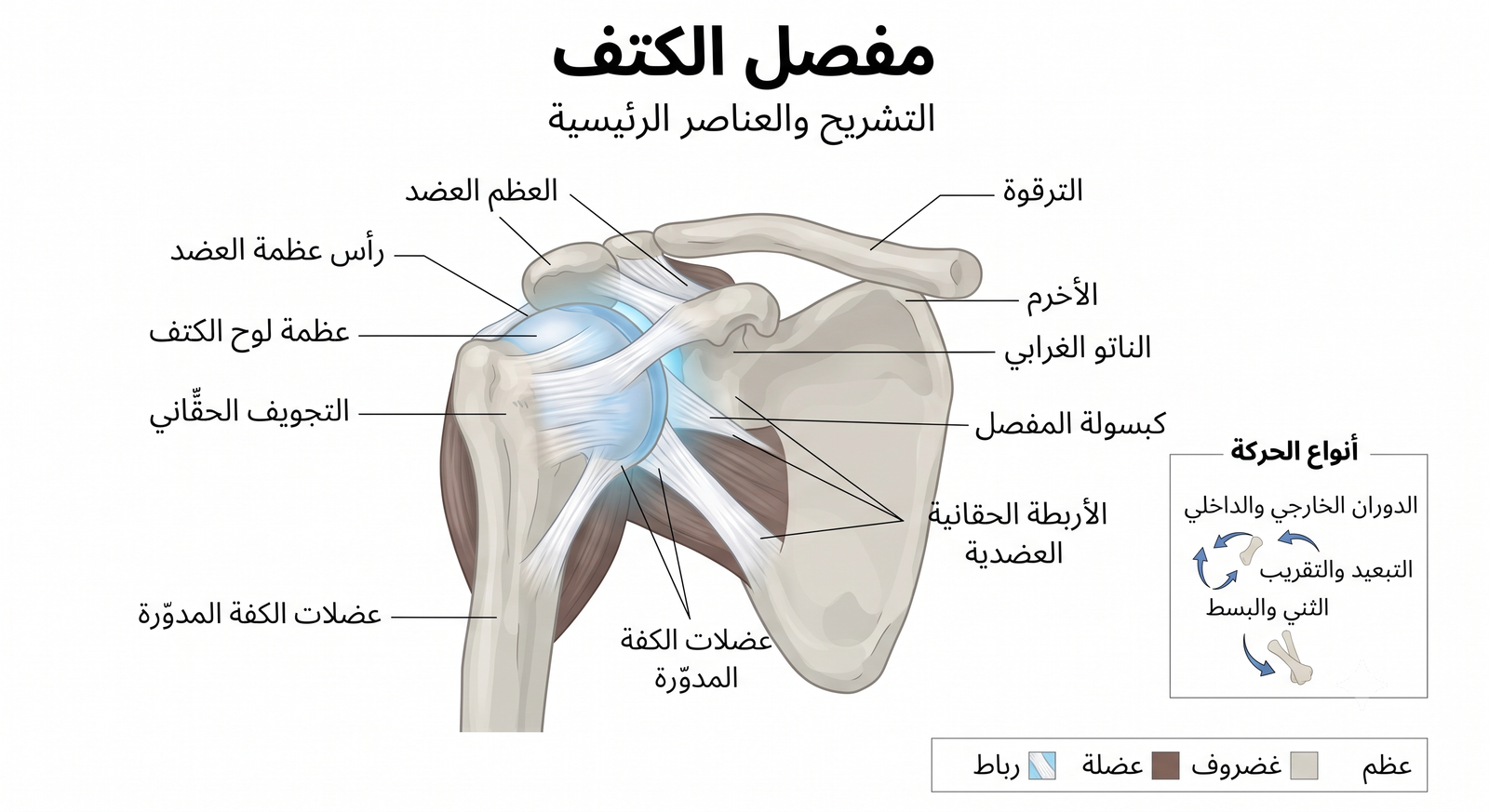
The shoulder joint consists of the humeral head (ball) and the glenoid (socket). Smooth cartilage covers both surfaces for frictionless movement. The rotator cuff (four muscles and tendons) surrounds the joint, controlling its motion and stability, while the capsule and ligaments provide further structural support. When cartilage erodes or the rotator cuff tears irreparably, joint replacement becomes the optimal option.
Indications for Surgery
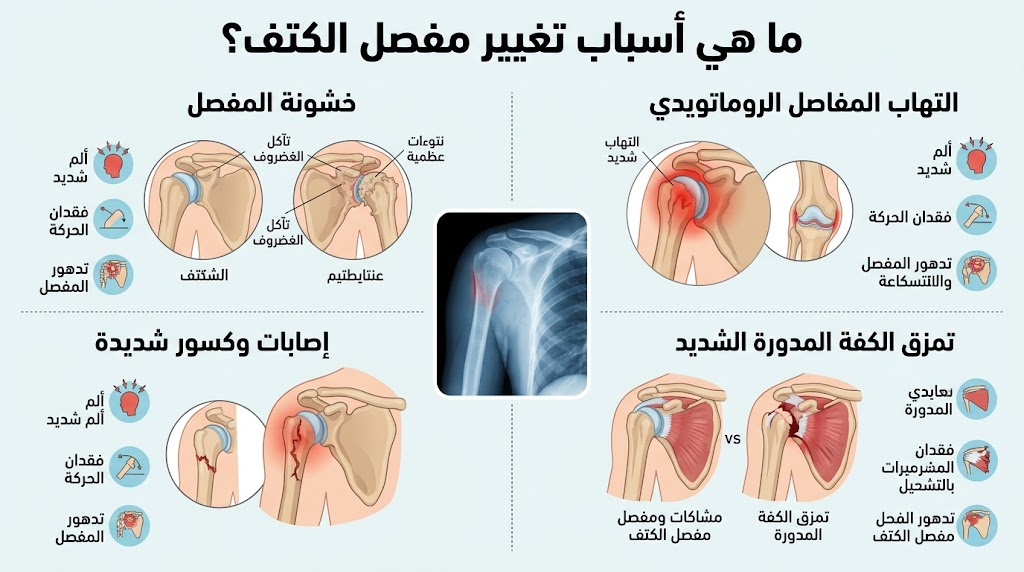
Surgery is indicated when conservative treatments and injections fail to manage pain or restore movement. Key reasons include advanced osteoarthritis with complete cartilage wear, massive irreparable rotator cuff tears with arthritis (rotator cuff arthropathy), complex proximal humerus fractures in the elderly, and avascular necrosis.
| Indication | Appropriate Artificial Joint |
| Advanced arthritis with intact rotator cuff | Anatomic TSA |
| Arthritis with massive rotator cuff tear | Reverse TSA |
| Complex humeral head fracture (elderly) | Reverse TSA |
| Avascular necrosis | Based on rotator cuff status |
| Failed previous replacement (revision) | Typically Reverse TSA |
Types of Shoulder Arthroplasty
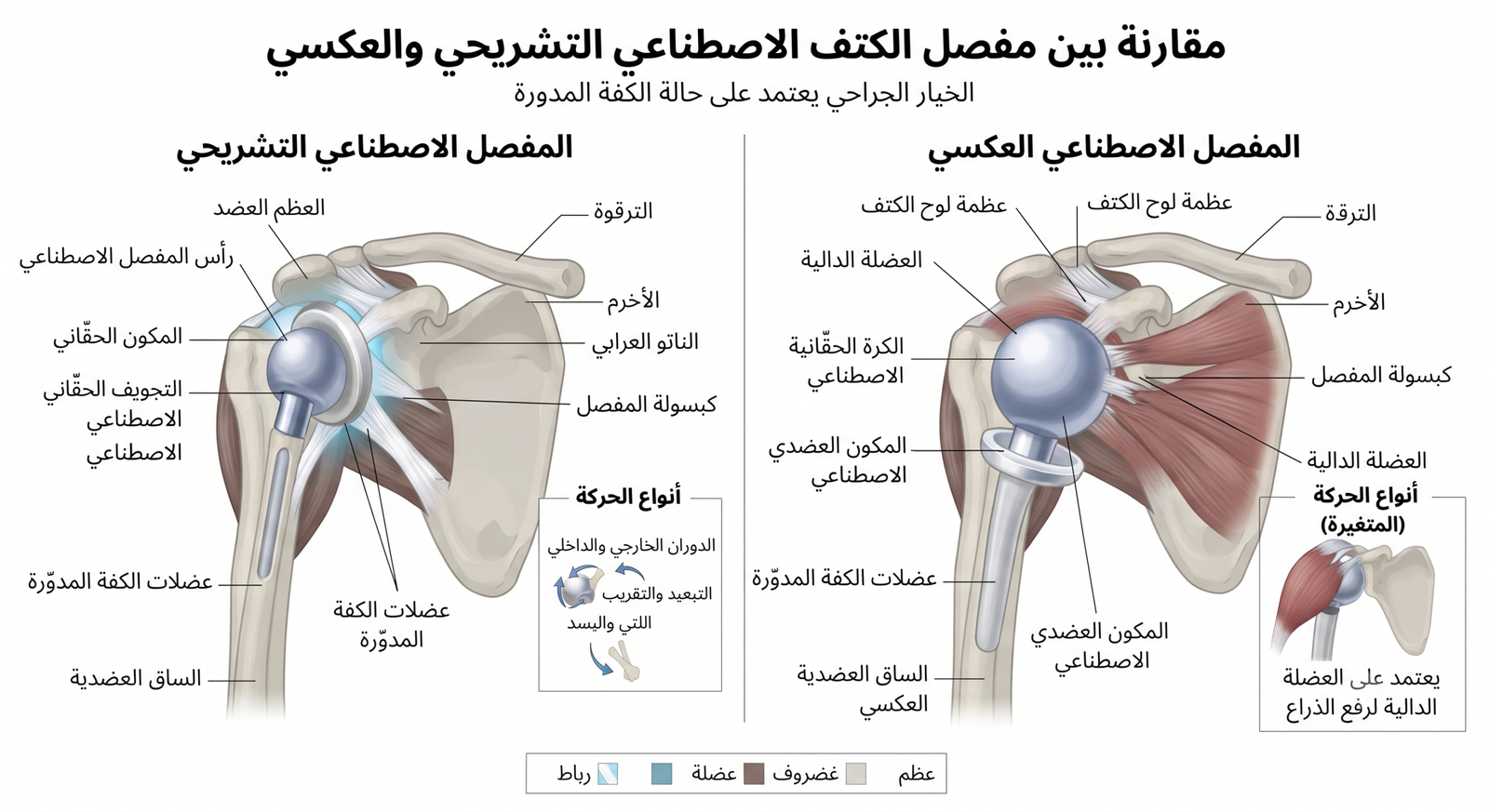
- Anatomic Total Shoulder Replacement: Mimics natural shoulder anatomy—a metal ball is fixed to the humerus and a plastic socket to the glenoid. It is used when the rotator cuff is intact, providing excellent motion and function.
- Reverse Total Shoulder Replacement: Reverses natural anatomy—the metal ball (glenosphere) is fixed to the glenoid, and the socket to the humerus. This design allows the deltoid muscle to move the shoulder instead of a damaged rotator cuff.
Surgical Procedure and Recovery
The surgery lasts 2–3 hours under general anesthesia with a nerve block. Patients typically remain in the hospital for 1–3 nights. Following surgery, adherence to instructions is essential for the longevity of the implant; most patients achieve maximum improvement within 12–18 months.
- Initial Weeks (1–6): Wear a sling continuously for 6 weeks, use ice for 15–20 minutes every 2–3 hours to reduce swelling, and perform daily hand and elbow exercises to prevent blood clots. Sleep in a semi-seated position at 45° or in a reclined chair.
- Rehabilitation (6 weeks – 6 months): Begin physical therapy with passive, gradually transitioning to active, exercises. Light daily activities can usually resume after 8–12 weeks.
- Long-term: Permanently avoid lifting weights over 5–7 kg and contact sports. Inform doctors or dentists of the prosthetic joint, as prophylactic antibiotics may be required.

Estimated Costs in Egypt (2026)
- Anatomic TSA: 120,000 – 200,000 EGP.
- Reverse TSA: 150,000 – 250,000 EGP.
- Costs include the prosthetic joint, hospital stay, anesthesia, and surgeon fees.
Shoulder Arthroplasty Cost Estimator
Estimate the expected surgical fee and hospital bundle according to clinical parameters
- Modular Implant & Fixation Hardware: ~55% – 65%
- Operating Theater, Inpatient Stay & Nursing: ~20% – 25%
- Surgical Team & Anesthesiology Services: ~15% – 20%
Outcomes
While the shoulder functions very well post-surgery, it is not 100% “normal.” Patient satisfaction reaches 90%, with 80–90% pain improvement. The SANE score improves from 31% pre-operatively to 73% of normal function. Most patients return to daily activities without pain within 8–12 weeks, provided they observe permanent restrictions to preserve the 15–20 year lifespan of the implant.
Frequently Asked Questions: Shoulder Arthroplasty
1. What is shoulder arthroplasty, and what clinical conditions does it treat?
Shoulder arthroplasty (shoulder replacement surgery) is a surgical reconstruction where damaged articulating surfaces of the glenohumeral joint are resected and replaced with prosthetic metal, ceramic, and polyethylene components. It is indicated for end-stage primary glenohumeral osteoarthritis, rotator cuff tear arthropathy, complex proximal humerus fractures, avascular necrosis (osteonecrosis) of the humeral head, and severe inflammatory arthritis refractory to conservative therapy.
2. What is the key difference between Anatomic Total Shoulder Arthroplasty (aTSA) and Reverse Total Shoulder Arthroplasty (rTSA)?
Anatomic Total Shoulder Arthroplasty (aTSA) preserves native kinematics by mounting a metal/ceramic ball on the humerus and a polyethylene socket on the glenoid; it strictly relies on a structurally intact and functional rotator cuff. Reverse Total Shoulder Arthroplasty (rTSA) inverts normal anatomy by affixing a hemispherical glenosphere to the glenoid socket and a concave cup on the humerus. This shifts the center of rotation medially and inferiorly, allowing the deltoid muscle to power overhead elevation independently of a deficient rotator cuff.
3. When is Hemiarthroplasty chosen over Total Shoulder Replacement?
Hemiarthroplasty replaces only the humeral head while preserving the native glenoid socket. It is typically reserved for severe, multi-fragmented proximal humerus fractures in younger patients, avascular necrosis with an intact, uncompromised glenoid cartilage surface, or cases where severe glenoid bone erosion precludes secure glenoid component fixation.
4. What role does 3D CT preoperative planning and Patient-Specific Instrumentation (PSI) play?
Preoperative 3D CT reconstruction and computer-assisted software allow the surgeon to accurately map retroversion, superior inclination, and asymmetric glenoid bone loss (Walch classification). Patient-Specific Instrumentation (PSI) and patient-matched surgical guides ensure precise implant trajectory, optimal screw purchase, enhanced fixation, and lower rates of premature glenoid loosening.
5. How long does a modern shoulder prosthesis typically last?
Long-term registry data from major joint registries (such as the Australian and UK registries) and peer-reviewed literature demonstrate an implant survivorship of 85% to 90% at 10 to 15 years for both modern anatomic and reverse designs, provided the components are accurately positioned and post-operative excessive shearing loads are avoided.
6. What type of anesthesia is utilized during shoulder replacement surgery?
Most procedures are performed under general anesthesia combined with an ultrasound-guided interscalene brachial plexus block (or superior trunk block). This regional block provides profound preemptive intraoperative analgesia and dramatically reduces post-operative narcotic requirements for 18 to 24 hours.
7. What are the common potential risks and complications associated with shoulder replacement?
Potential surgical complications include periprosthetic joint infection (with Cutibacterium acnes being a notable pathogen in shoulder surgery), glenoid or humeral component aseptic loosening, prosthetic instability or dislocation, axillary or suprascapular nerve neuropraxia, periprosthetic fractures, and in rTSA, inferior scapular notching.
8. What does the typical post-operative rehabilitation timeline look like?
Rehabilitation begins with immobilization in an abduction sling for 4 to 6 weeks. Phase 1 focuses on passive range-of-motion (ROM) exercises with protected external rotation to protect subscapularis repair (in aTSA). Phase 2 (weeks 6-12) transitions to active-assisted and active ROM. Phase 3 (beyond 12 weeks) incorporates periscapular and rotator cuff or deltoid progressive resistance strengthening.
9. Can patients return to sports and physical activities after shoulder arthroplasty?
Yes. Most patients safely return to low-to-moderate impact recreational sports, including swimming, golf, doubles tennis, cycling, and low-impact gym conditioning within 4 to 6 months post-operatively. High-impact contact sports, heavy powerlifting, and ballistic overhead loading are strongly discouraged to avoid eccentric polyethylene wear and periprosthetic failure.
10. What signs indicate that a shoulder replacement needs clinical re-evaluation or revision?
A patient should seek immediate orthopedic evaluation if they experience a sudden return of deep aching joint pain, acute swelling, redness, fever, progressive loss of overhead motion, feelings of mechanical subluxation/clunking, or sudden weakness following trauma or a fall.
references
- American Academy of Orthopaedic Surgeons (AAOS), OrthoInfo: Shoulder Joint Replacement
- American Academy of Orthopaedic Surgeons (AAOS), OrthoInfo: Reverse Total Shoulder Replacement
- American Academy of Orthopaedic Surgeons (AAOS), OrthoInfo: Arthritis of the Shoulder
Pingback: Complications Of Shoulder Arthroplasty - American Center For Knee And Shoulder Surgeries 2026