
Right shoulder pain is a common clinical complaint. While often stemming from simple musculoskeletal strain, it can also indicate joint pathologies such as rotator cuff tears or, less frequently, referred pain from internal organs like the liver or gallbladder. Accurate diagnosis is essential, as treatment protocols vary significantly based on the underlying etiology.
Anatomy of the Shoulder
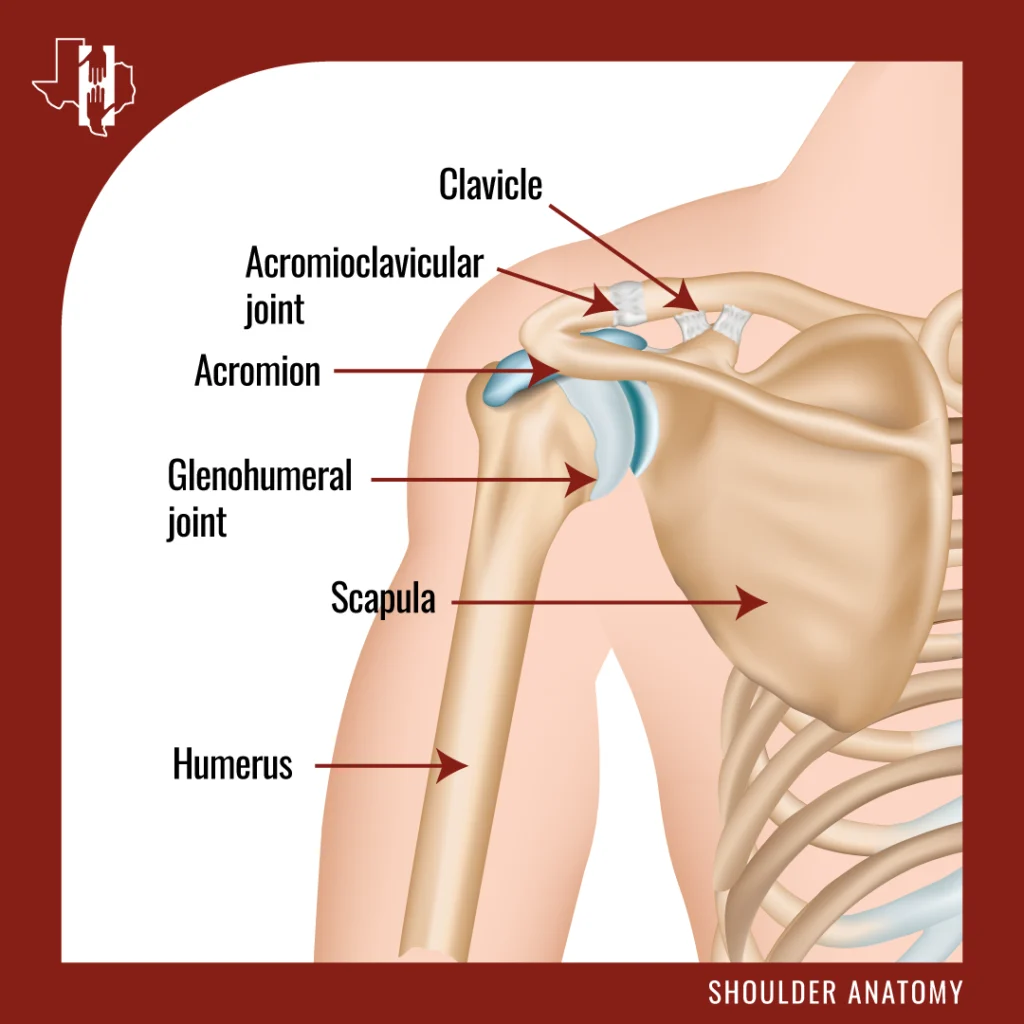
The shoulder is the most mobile joint in the human body. Its complexity, which provides extensive range of motion (ROM), also renders it susceptible to various injuries. Key structures include:
- Humeral Head (Ball): The upper, spherical part of the arm bone.
- Glenoid Cavity (Socket): A shallow depression in the scapula.
- Labrum: A cartilaginous ring that deepens the socket.
- Rotator Cuff: Four muscles and their tendons that provide dynamic stability.
- Bursae: Fluid-filled sacs that reduce friction between tendons and bone.
Causes of Right Shoulder Pain
1. Musculoskeletal Causes (Most Common)
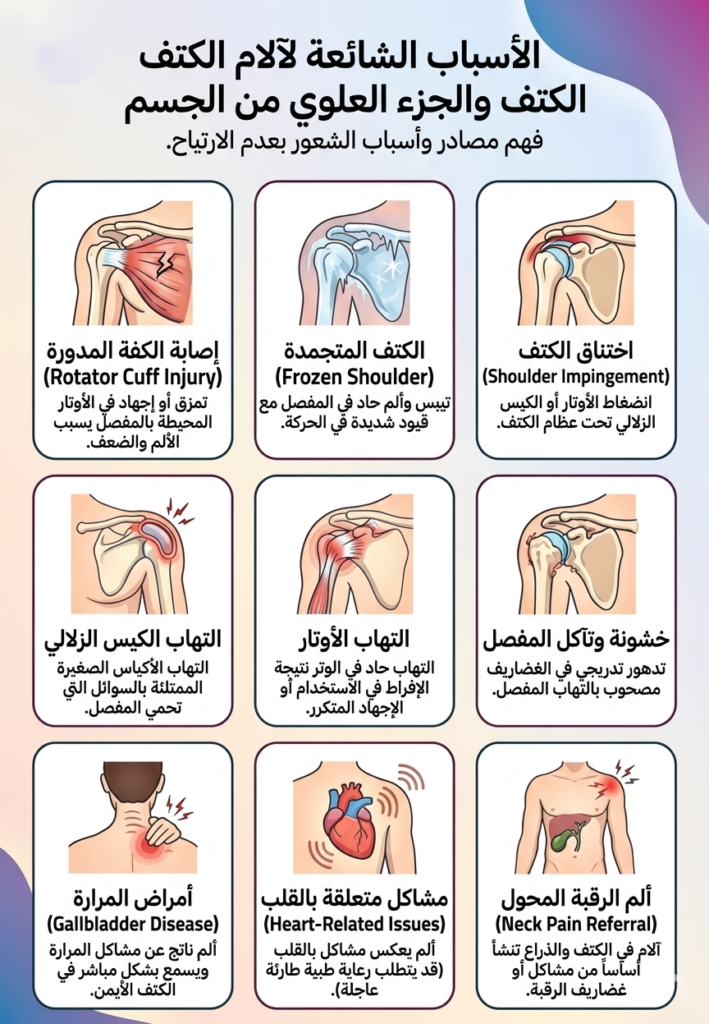
- Rotator Cuff Tears: Often occurs in individuals over 40 or following acute trauma.
- Tendinitis: Inflammation due to repetitive use or strain, common in athletes and laborers.
- Bursitis: Inflammation of the fluid-filled sacs surrounding the joint.
- Frozen Shoulder (Adhesive Capsulitis): Progressive stiffness restricting ROM, common in diabetics and those aged 40–60.
- Calcific Tendinitis: Calcium deposits within tendons causing acute, severe pain.
- Dislocation: Displacement of the humeral head from the glenoid cavity.
- Osteoarthritis: Cartilage wear, typically in patients over 60.
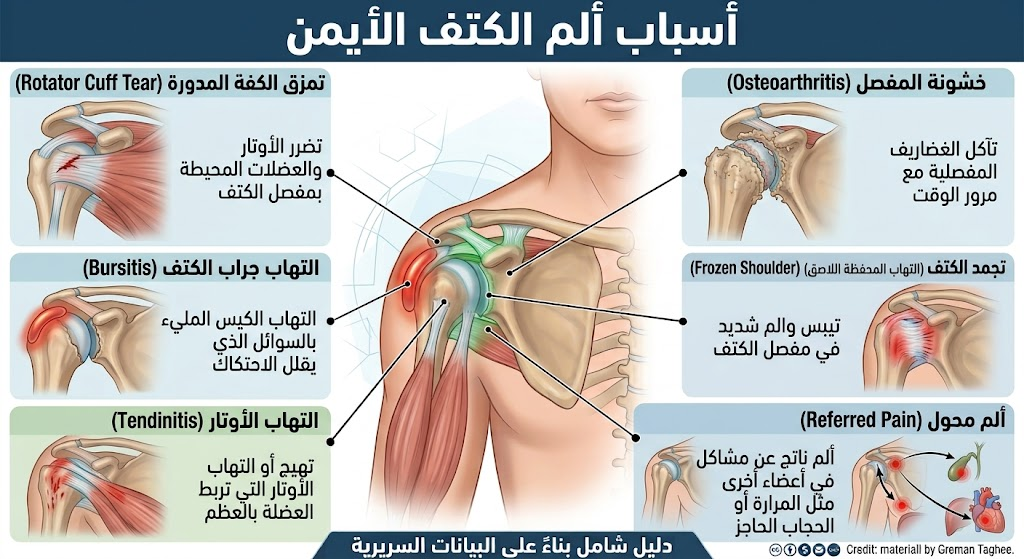
2. Extrinsic Causes
- Cervical Radiculopathy: Herniated discs in the neck compressing nerves, causing referred pain into the shoulder and arm.
- Gallbladder or Liver Issues: Right-sided shoulder pain can occasionally be “referred pain” from inflammation or gallstones.
- Cardiac Issues: While typically associated with the left shoulder, cardiac problems can, in rare instances, manifest on the right.
When is Shoulder Pain Dangerous?
Minor discomfort that resolves with rest is usually benign. However, sudden, severe, or persistent pain requires medical evaluation.
Seek Medical Attention Within 24 Hours If:
- Pain is sudden and severe following a fall or direct impact.
- The arm cannot be lifted or moved.
- There is visible joint deformity (possible fracture or dislocation).
- Numbness or weakness occurs in the hand or fingers.
Seek Medical Attention Within One Week If:
- Pain persists for more than two weeks despite rest.
- Night pain disrupts sleep.
- Daily activities (dressing, reaching overhead) become increasingly difficult.
- Gradual stiffness limits ROM.

Seek Emergency Care Immediately If:
- Shoulder pain is accompanied by abdominal pain, nausea, or jaundice (potential gallbladder/liver emergency).
- Pain is associated with shortness of breath or chest pressure.
- High fever is accompanied by severe joint swelling, redness, and heat (potential septic arthritis).
The Impact of Diabetes
Diabetes significantly increases the risk of shoulder pathology. Shoulder pain is more common in people with diabetes, and they have a several-fold higher risk of developing “frozen shoulder.” High blood sugar hardens connective tissues (via advanced glycation end-products), impairs microvascular blood flow to tendons, and promotes chronic systemic inflammation.
Self-Assessment Tests
While these tests do not replace professional evaluation, they may help identify the nature of your pain:
- Lateral Raise Test: Pain between 60° and 120° (the “painful arc”) may indicate rotator cuff tendinitis or bursitis.
- Back Touch Test: Difficulty reaching the middle of your back can indicate stiffness or impingement.
- Night Pain Test: If lying on the affected side consistently awakens you, it is a strong indicator of an inflammatory process requiring clinical assessment.
Critical Warning Signs (Red Flags)
Consult an orthopaedic specialist if you experience:
- Pain that does not improve after two weeks of home management.
- Sudden weakness (e.g., inability to hold a cup).
- Audible clicking or popping associated with pain during movement.
- Progressive stiffness that worsens weekly.
- Pain radiating from the shoulder down to the hand (suggestive of cervical nerve involvement).
Right Shoulder Pain FAQ
1. What are the most common orthopedic causes of right shoulder pain?
The most frequent orthopedic conditions affecting the right shoulder involve rotator cuff pathologies (tendinitis, calcific deposits, or structural tears), subacromial impingement syndrome, bicipital tendinitis, subacromial bursitis, and degenerative glenohumeral arthritis.
2. Can issues in internal organs cause referred pain in the right shoulder?
Yes, visceral structures can present as referred right shoulder pain. Pathologies within the gallbladder (such as acute cholecystitis or biliary colic) or localized liver conditions can cause irritation to the underlying right diaphragmatic leaf, projecting referred pain pathways up to the right shoulder via the shared phrenic nerve network.
3. How can I differentiate between an intrinsic shoulder issue and cervical spine referred pain?
True mechanical shoulder conditions are structurally exacerbated by direct active arm movements, reaching overhead, or lifting objects. Cervical nerve root compression (radiculopathy), conversely, typically manifests as a radiating or burning pain traveling down the arm, often aggravated by specific neck rotations and accompanied by neurological paresthesia (numbness or tingling).
4. When should right shoulder pain be treated as a medical emergency?
Right shoulder pain must be evaluated instantly in an emergency department if it appears suddenly without trauma and is coupled with systemic symptoms such as heavy chest tightness, shortness of breath, unexplained profuse sweating, acute dizziness, or radiating discomfort extending into the lower jaw or neck.
5. What diagnostic tools are used to determine the exact cause of right shoulder pain?
Following a meticulous clinical exam and special orthopedic testing, definitive diagnostics rely on objective imaging models. Plain radiographs (X-rays) assess bony spacing and osteophyte formation, while high-resolution Ultrasound (US) or Magnetic Resonance Imaging (MRI) is utilized to meticulously map soft-tissue pathologies like tendon tears or labral damage.
6. What is the first-line conservative management for mechanical right shoulder pain?
Initial clinical management focuses on strategic activity modification (limiting painful overhead reach while preserving safe joint movement indices), scheduled short-term oral non-steroidal anti-inflammatory drugs (NSAIDs) to regulate local soft-tissue swelling, and early implementation of specialized clinical rehabilitation.
7. When are corticosteroid injections recommended for right shoulder pain?
Localized subacromial or intra-articular corticosteroid injections are indicated when chronic, intense inflammatory pain prevents a patient from sleeping through the night or severely disrupts their ability to perform the basic movements required during structured physical therapy.
8. How does dynamic physical therapy help resolve chronic right shoulder pain?
Physical therapy systematically corrects scapulothoracic and glenohumeral dysfunction. By gently restoring passive range limitations, mobilizing capsule contractures, and balancing the strength of the rotator cuff muscles, it re-centers the humeral head and eliminates structural mechanical impingement.
9. Can a partial tendon tear causing right shoulder pain heal without surgery?
Yes. Low-grade or stable partial-thickness rotator cuff tears show excellent response rates under a comprehensive conservative framework. While complete anatomical closing of the tissue edge may not always occur, compensatory periscapular strengthening routinely leads to complete pain-free functional stability.
10. When is surgical intervention considered necessary for right shoulder pain?
Surgical intervention, typically performed via minimally invasive arthroscopic methods, is strictly considered when a patient presents with clear, severe structural damage—such as a large full-thickness rotator cuff tear, structural labral instability, or refractory calcific tendinitis—that completely fails to progress after 3 to 6 months of targeted conservative care.
References
- American Academy of Orthopaedic Surgeons (AAOS), OrthoInfo: Shoulder Pain and Common Shoulder Problems
- American Academy of Orthopaedic Surgeons (AAOS), OrthoInfo: Shoulder Impingement / Rotator Cuff Tendinitis