
Complications of Rotator Cuff Repair are relatively rare. Major complication rates remain below 10% according to recent orthopedic studies. The most frequent complication is structural tendon re-tearing, and the average retear rate in published studies is about 27% (analysis of more than 8,000 shoulders), and it rises with larger tears, older age and fatty atrophy. Patient satisfaction is generally high when postoperative guidelines and physical therapy protocols are strictly followed.
Complication Incidence and Risk Stratification
The probability of surgical complications correlates closely with user demographics and original soft-tissue parameters.
| Complication Variant | Statistical Incidence | Highest-Risk Patient Cohort |
| Tendon Re-tear (Small Tear) | 3% – 7% | Age over 65; massive degenerative defects |
| Tendon Re-tear (Large Tear) | About 27% on average; higher in large tears | Age over 65; massive degenerative defects |
| Postoperative Joint Stiffness | 2% – 5% | Non-compliance with early rehabilitation |
| Adhesive Capsulitis (Frozen Shoulder) | 2% – 3% | Delayed initiation of physical therapy |
| Superficial / Deep Infection | 0.1% – 0.2% | Uncontrolled diabetes mellitus |
| Suture Anchor Failure | <1% | Advanced bone mineral loss (Osteoporosis) |
| Transient Neurological Irritation | <0.5% | Exceptionally rare injury profiles |
| Secondary Revision Surgery | 3% – 8% | Large initial tears with multiple risk factors |

Temporal Classification of Potential Risks
Acute Postoperative Complications (Within 6 Weeks)
- Pain and Edema: Normal inflammatory indicators managed with cryotherapy and scheduled analgesics. Unremitting, severe pain requires immediate clinical assessment.
- Surgical Site Infection: Characterized by spreading erythema, localized warmth, and purulent discharge. It is managed with targeted antibiotics and stays extremely rare (0.1–0.2%) under proper hygiene protocols.
- Early Arthrofibrosis: Delayed physical therapy causes scar tissue to fuse within the joint capsule, presenting severe treatment hurdles later.
Delayed Complications (Months to Years)
- Tendon Re-tearing: The most common major complication, typically caused by premature weight-bearing or early active activity expansion. Large initial tears carry a much higher failure risk than small ones.
- Adhesive Capsulitis: Severe progressive stiffness that occurs when phased physical therapy schedules are completely ignored.
- Persistent Muscular Weakness: If significant fatty muscle atrophy exists pre-operatively, full structural motor power may not completely recover despite extensive rehabilitation.
Mitigating Surgical Risks
The vast majority of postoperative complications are highly modifiable and preventable.
- Surgeon Experience: Reduces complications.
- Smoking Cessation (6 weeks pre-op): Prevents delayed tendinous remodeling and limits wound healing complications.
- Glycemic Regulation: Tightly controlled HbA1c directly blocks post-op surgical site infections.
- Osteoporosis Management: Maximizes bone mineral density to ensure rigid suture anchor fixation.
- Rehabilitation Compliance: Eliminates long-term capsule stiffness and protects the healing tendon construct.
Phased Physical Therapy Protocol
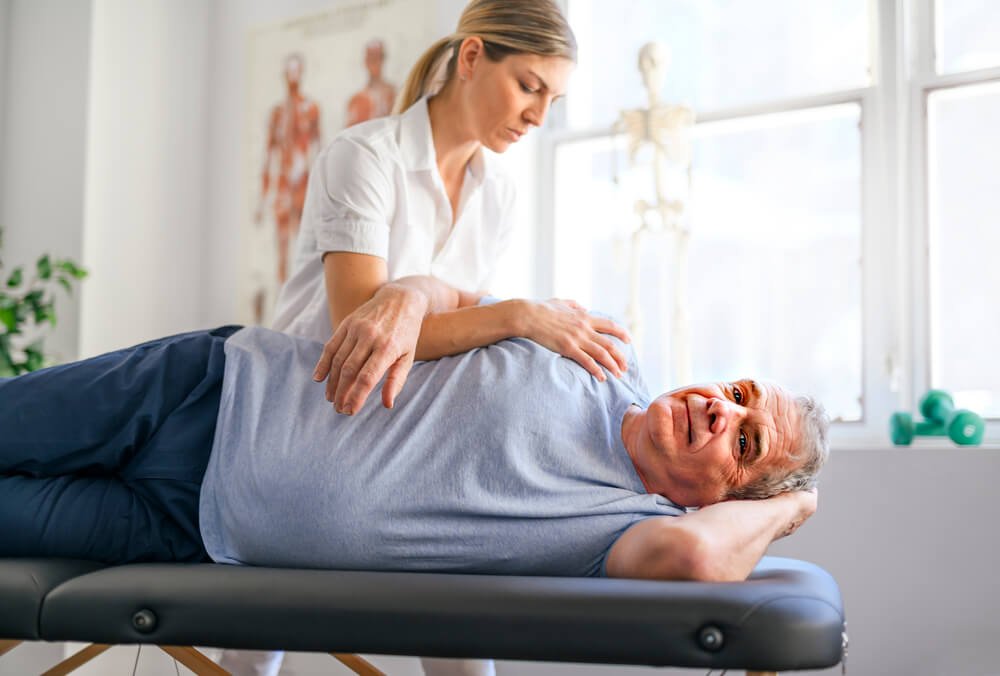
Structured physical therapy is a medical requirement to guide safe tissue healing and prevent joint contractures.
- Phase I (Weeks 1–4) – Complete Protection: Continuous sling immobilization; distal hand, wrist, and elbow movements only.
- Phase II (Weeks 4–8) – Passive Range of Motion: Cautious passive joint mobilization directed exclusively by the physical therapist; zero active muscle workload allowed.
- Phase III (Weeks 8–16) – Early Strengthening: Gradual introduction of low-intensity resistance using specialized elastic bands.
- Phase IV (Months 4–6) – Advanced Strengthening: Light weight training and progressive reintegration of permitted activities of daily living.
- Phase V (Months 6–9) – Return to Sport: Resumption of demanding athletic or overhead activities pending explicit orthopedic clearance.
Surgical Technique Influence & Efficacy Metrics
The overall success rate of arthroscopic repair spans between 80% and 95%. Small to medium defects experience a 90% to 95% success rate, whereas large tears report 80% to 88% structural success.
The Suture Bridge technique is one of several repair options chosen by tear size and tissue quality. Unmodifiable risk factors that still increase failure rates regardless of compliance include patient age over 65, chronic degenerative tear etiologies, and tears expanding past 3 cm.
Full structural recovery requires 6 to 9 months for minor tears, extending up to 12 months for massive defects. Tendon-to-bone healing continues for many months after surgery.
frequently asked questions
Rotator Cuff Repair Complications FAQ
1. What is the overall complication rate after arthroscopic rotator cuff repair?
Major complication rates following arthroscopic rotator cuff repair are relatively rare, remaining safely below 10% in modern clinical settings. Most standard risks are highly modifiable through strict compliance with postoperative care and proper surgical execution.
2. What is the most common major complication after rotator cuff surgery?
Tendon re-tearing represents the most common major structural complication, with an average rate of about 27% in published studies. It describes a biological or mechanical failure of the repaired tendon construct to fully heal into the bone.
3. How does the original tear size affect the risk of a tendon re-tear?
The initial size of the tendon tear serves as a critical indicator for long-term failure rates. Small-to-medium tears heal more reliably, while large and massive tears carry a much higher retear risk.
4. What causes postoperative joint stiffness, and how common is it?
Postoperative structural joint stiffness manifests in roughly 2% to 5% of repair cases. It is primarily driven by non-compliance during the rehabilitation phase or intentionally delaying structured, clinician-guided physical therapy sessions, causing the joint capsule to form dense scar contractures.
5. How does the chosen jgurgical technique impact structural re-tear rates?
The technical approach used during the repair directly alters mechanical stability. Clinical data reveals that utilizing advanced double-row constructs, such as the Suture Bridge technique, is one option; the strongest predictors of retear remain tear size, age and fatty atrophy rather than the technique alone.
6. Why are smoking and uncontrolled diabetes considered high risk factors for failure?
Nicotine causes significant peripheral vasoconstriction, directly restricting oxygenated blood flow and cellular growth factors from reaching the tendon-bone footprint during remodeling. Uncontrolled blood glucose levels weaken local tissue immune responses, drastically elevating wound infection rates (0.1–0.2%) and slowing epithelial recovery.
7. What is suture anchor failure, and what triggers it?
Suture anchor failure involves the mechanical loosening or pulling out of anchor devices from the humeral bone, occurring in less than 1% of repairs. It is triggered by poor localized bone quality, such as advanced osteoporosis, or unintended early active shoulder motion and sudden heavy loading during the acute immobilization phase.
8. What clinical red-flag symptoms require immediate evaluation by a surgeon?
Patients must seek immediate clinical screening if they experience a core body temperature over 38.5°C after day 3, increasing local swelling with spreading redness, purulent or foul-smelling wound drainage, a sudden catastrophic surge in deep pain after previous stability, or an explicit mechanical “snapping” feeling coupled with a sudden loss of arm elevation capacity.
References
- American Academy of Orthopaedic Surgeons (AAOS), OrthoInfo: Rotator Cuff Tears
- American Academy of Orthopaedic Surgeons (AAOS), OrthoInfo: Rotator Cuff Tears: Surgical Treatment Options
- Kukkonen J, et al. Treatment of non-traumatic rotator cuff tears. The Bone & Joint Journal. 2014;96-B:75-81. doi:10.1302/0301-620X.96B1.32168
- Yamamoto A, et al. Prevalence and risk factors of a rotator cuff tear in the general population. J Shoulder Elbow Surg. 2010;19(1):116-120. doi:10.1016/j.jse.2009.04.006
- Kuhn JE, et al. Effectiveness of physical therapy in treating atraumatic full-thickness rotator cuff tears: a multicenter prospective cohort study. J Shoulder Elbow Surg. 2013;22(10):1371-1379. doi:10.1016/j.jse.2013.01.026
- McElvany MD, et al. Rotator cuff repair: published evidence on factors associated with repair integrity and clinical outcome. Am J Sports Med. 2015;43(2):491-500. doi:10.1177/0363546514529644